We are a troubleshooting company. Before we dig, we find out which part failed and why, so you pay for the fix that stops the problem and not a guess.
When you need septic system repair
- Sewage backs up even though the tank was pumped recently.
- The yard is soggy or sinking over the tank or the line to the field.
- A lid is cracked, missing, or sits below grade with no riser.
- Roots have grown into the line between the house and the tank.
- The drain field stays wet and the grass over it smells.
- A pump-out showed a broken baffle or a cracked tank wall.
- A vehicle or equipment drove over the tank or the field lines.
What we do on site
- Trace the problem. We start at the house and work out to the field, checking the line, the tank, and the field in order. A backup can start in any of them, and the fix is different for each.
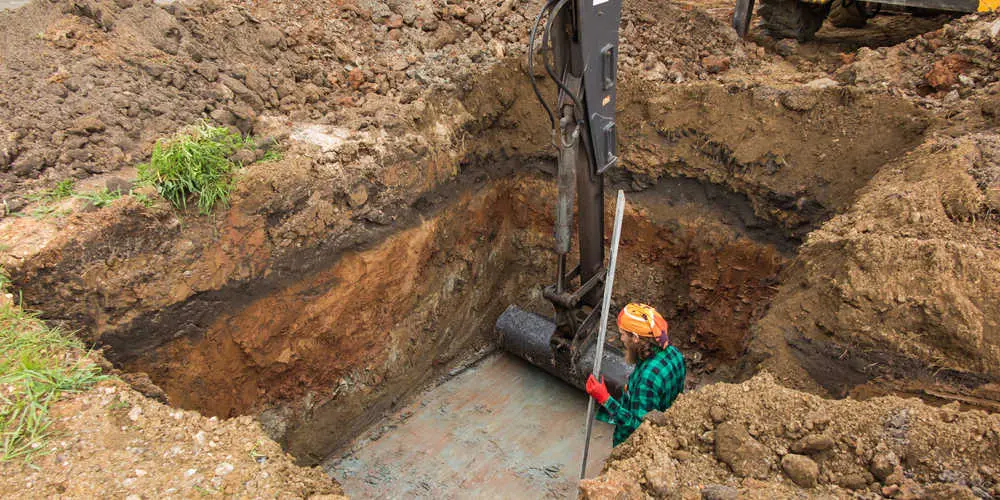
- Expose the failed part. We dig only where the trace points. That keeps the yard as intact as the repair allows.
- Repair or replace the part. We replace broken lines, baffles, and lids, seal or replace damaged tanks, and add risers where the lid sits too deep. For a failing drain field, we restore or rebuild the field.
- Test the repair. We run water through the system and watch it move from the house to the field. A repair is not done until the water goes where it should.
- Handle the permit side. Some septic system repair work needs a permit, and we help with the paperwork. We work to TCEQ standards on every repair.
- Show you what failed. We walk you through what broke and what we did. If something else is close to failing, we say so and leave the decision with you.
Septic system repair in Montgomery County
Clay soil changes how a drain field repair works here. Water moves through it slowly, so a field that was undersized or overloaded fails sooner than it would in sand, and the fix often means more field or a different system type.
Montgomery County Environmental Health Services permits septic systems in the county. Within 2,075 feet of Lake Conroe, the San Jacinto River Authority permits them instead, with stricter rules, so a lakefront repair takes more planning.
Many homes here run aerobic systems, which add pumps, sprinklers, and a control panel to the picture. When the repair is electrical or mechanical, we cover that too.
What affects the cost
- Which part failed: a lid, a line, a baffle, the tank, or the field.
- How deep the failed part sits and how much digging it takes to reach it.
- Whether a permit is needed, and whether it comes from the county or SJRA.
- Access for equipment across the yard, fences, and driveways.
- Whether the system is aerobic or conventional.
Estimates are free, and we beat any written quote. We give you the estimate after the trace, so it is based on what actually failed.
How to get ready
Cut water use as far as you can until the repair is done. Every load of laundry adds water to a system that is not draining.
Tell us about anything recent: a new driveway, a pool, heavy rain, or a truck in the yard. Mark any sprinkler lines, dog fences, or buried cables you know about.
After the repair, keep vehicles off the tank and field. If we disturbed the lawn, it fills back in once the soil settles.