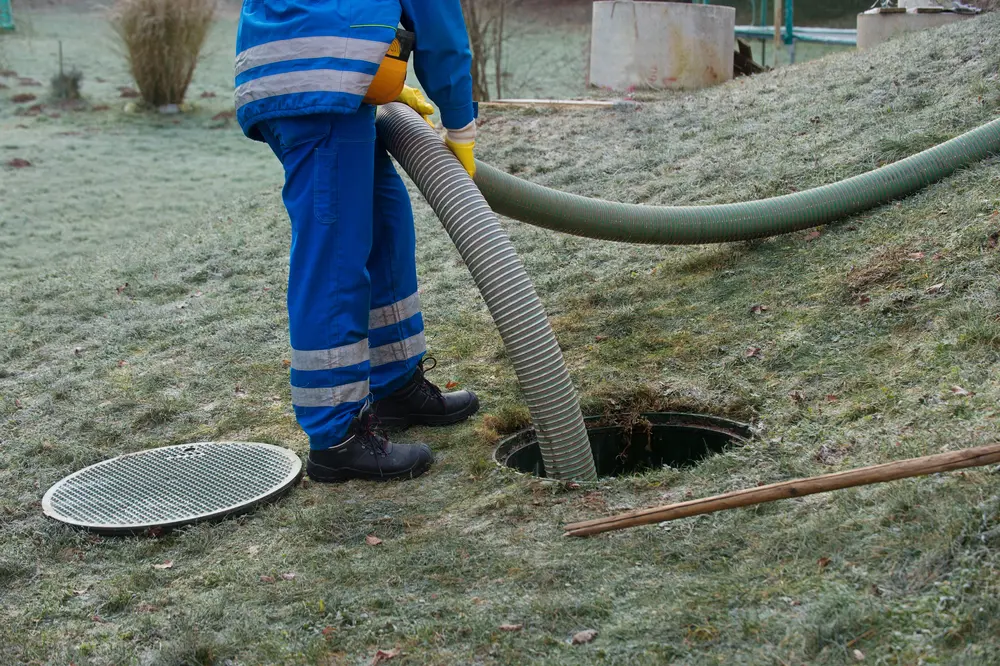
We serve laundromats, apartment laundry rooms, businesses, and homes with either system. Call when a trap is due, a washer drain backs up, or a holding tank alarm comes on.
When you need lint trap and holding tank service
- Washers drain slowly or water backs up at the floor drain.
- The lint trap is due on its regular cleaning schedule.
- A holding tank high-level alarm is on.
- A holding tank is close to full before a busy weekend or event.
- A building with a lint trap or holding tank has changed hands and nobody knows when it was last serviced.
What we do on site
- Check the level. For a holding tank, we check how full it is and whether the alarm float works. For a lint trap, we check how much lint has packed in since the last cleaning.
- Pump it out. We pump the lint trap or the holding tank until it is empty. Lint packs into a mat, so we break it up to get it all out.
- Clean the screens and baffles. Lint traps often have screens or baskets that clog. We clear them so washer water passes through at full flow again.
- Inspect the tank. With the tank empty, we check the walls, the lid, and the inlet for cracks or leaks. A holding tank that lets groundwater in fills much faster than it should.
- Set the next service. We tell you how full it was and when to call again. For busy laundries, we can set a regular schedule.
Lint trap and holding tank service in Montgomery County
Many businesses and homes outside city limits here sit on private septic. Lint that gets past a trap settles in the septic tank and can plug the drain field, which in clay soil is already slow to drain. A clean lint trap protects the field behind it.
Holding tanks show up where a drain field will not work, such as some small lots or sites near water. Lots within 2,075 feet of Lake Conroe fall under San Jacinto River Authority rules, which are stricter than the county's. A holding tank there has to stay pumped on time.
What affects the cost
- The size of the lint trap or holding tank.
- How long it has been since the last service.
- How packed the lint is, or how full the holding tank has gotten.
- How close the truck can park to the lid.
- Whether the job fits your schedule or needs an after-hours visit.
- Repairs to lids, screens, or alarm floats found during service.
We give free estimates, and we beat any written quote. Call (936) 209-5078 to set up service.
How to get ready
Stop running washers about an hour before we arrive so the trap is not filling while we work. For a holding tank, cut water use once the alarm comes on and clear a path to the lid.
After service, keep an eye on the alarm light and the washer drains. Tell us if the tank fills faster than we planned, since that can point to a leak.