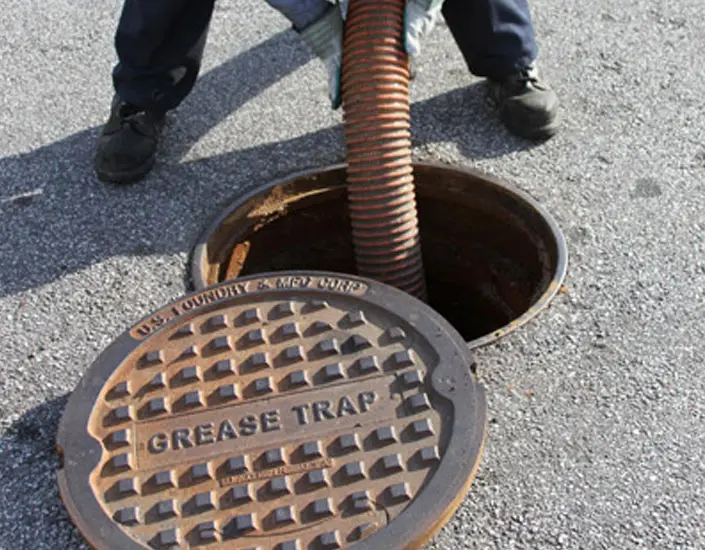
We pump and clean grease traps and grease interceptors for restaurants, commercial kitchens, and homes with their own trap. We are open 24/7, so the work can happen before you open or after you close.
When you need grease trap pumping and cleaning
- The trap is due on your regular pumping schedule.
- Kitchen sinks or floor drains run slow during a busy shift.
- A grease smell comes up from the drains or the trap lid.
- Grease shows up in a manhole or cleanout downstream of the trap.
- A new restaurant is taking over a building with a trap of unknown condition.
- A home with a residential grease trap has kitchen lines backing up.
What we do on site
- Open the trap and look first. We check how thick the grease cap is on top and how deep the solids are on the bottom. That tells us how full the trap got since the last cleaning.
- Pump it out. We pump the grease, water, and settled solids until the trap or interceptor is empty. We do not just skim the top layer.
- Scrape the walls and baffles. Hardened grease clings to the walls, the baffles, and the inlet and outlet. We clear it so the trap holds its full volume again.
- Check the parts. We look at the baffles, the tees, and the lid for cracks or missing pieces. A broken baffle lets grease pass straight through to the line.
- Close up and report. We set the lid, clean up the area, and tell you what we found. If the trap filled faster than it should, we tell you what to change in the kitchen.
Grease trap pumping and cleaning in Montgomery County
Many businesses outside city limits here sit on private septic, not a city sewer. Grease that gets past a trap on those properties ends up in the septic tank and can clog the drain field. Keeping the trap clean protects the whole system behind it.
We own our licensed waste disposal facility, which keeps pumping costs down. That matters for kitchens that need service often, and it means one call covers the whole job.
What affects the cost
- The size of the trap or interceptor.
- How long it has been since the last cleaning.
- How much hardened grease has built up on the walls.
- Where the trap sits and how close the truck can park.
- Whether the job has to happen after hours around your service.
- Repairs to baffles, tees, or lids found during the cleaning.
We give free estimates, and we beat any written quote. Call (936) 209-5078 to set a schedule.
How to get ready
Tell us the size of the trap if you know it, and when it was last pumped. Clear access to the lid, and let us know if a parking lot or drive-through lane needs to be blocked off.
After the cleaning, scrape plates into the trash and wipe greasy pans before washing. Keep food scraps out of the floor drains so the trap lasts to its next service. If the kitchen lines still run slow after a cleaning, the problem is past the trap, and we can clear that line too.